Tips for Creating a Cozy and Productive Home Office Space
Creating a cozy and productive home office is essential for anyone working from home or managing personal projects. A well-designed space not only helps you stay focused but also makes your workday more enjoyable. In this post, we’ll explore practical tips to transform any area into a comfortable and efficient workspace.
1. Choose the Right Location
Selecting the right spot for your home office is the first step toward creating a productive environment.
– Natural Light: Aim for a space with plenty of natural light. Sunlight improves mood and energy levels. Position your desk near a window if possible.
– Quiet Zone: Pick a quiet corner or room that minimizes distractions. Avoid areas with heavy foot traffic or loud noise.
– Space Considerations: Ensure you have enough room for your desk, chair, and any necessary equipment without feeling cramped.
2. Invest in Ergonomic Furniture
Comfort is key to staying productive during long work hours.
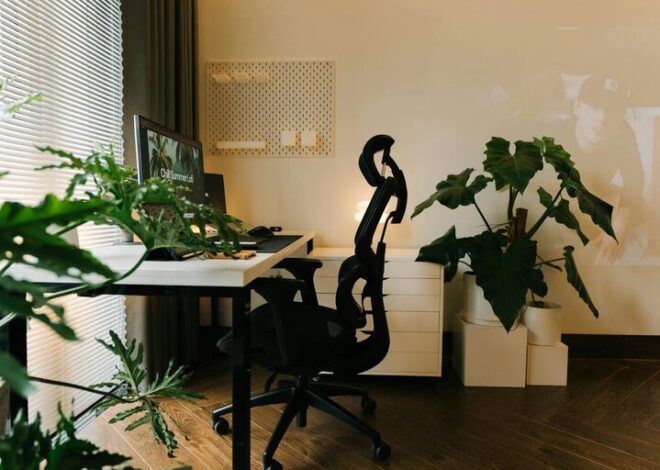
– Ergonomic Chair: Choose a chair that supports your back and promotes good posture. Adjustable height and lumbar support are important features.
– Desk Selection: Your desk should accommodate your computer and other essentials while allowing legroom beneath. Consider a standing desk option to alternate between sitting and standing.
– Proper Monitor Height: Position your monitor so the top of the screen is at eye level. This helps reduce neck strain.
3. Optimize Lighting
Good lighting reduces eye strain and keeps you alert.
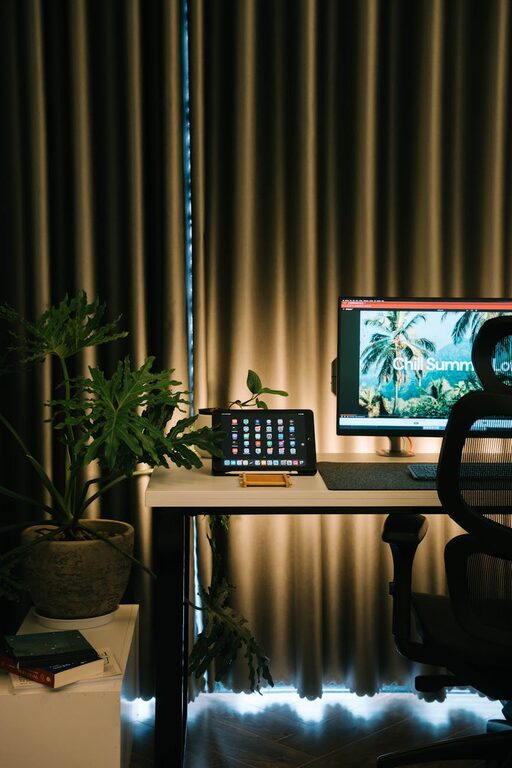
– Natural Light: As mentioned, natural light is beneficial. Avoid glare on your screen by adjusting blinds or curtains.
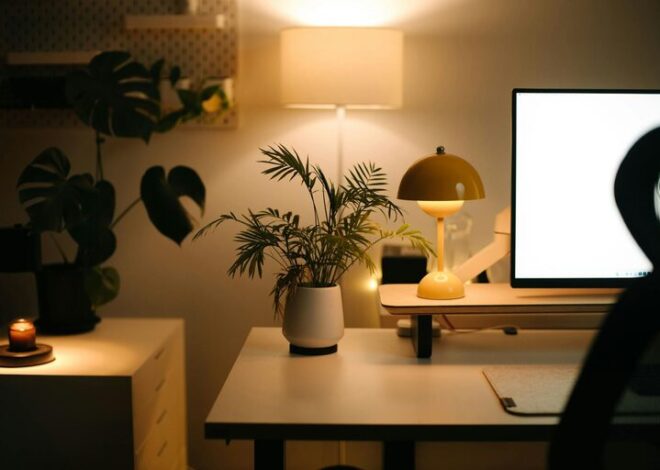
– Task Lighting: Add a desk lamp with adjustable brightness for focused work. Warm light bulbs create a cozy atmosphere, while cool lights help with concentration.
– Layered Lighting: Combine overhead lights with lamps to create a balanced environment that can be adjusted throughout the day.
4. Organize with Purpose
A tidy workspace promotes focus and efficiency.
– Declutter Daily: Keep only what you need on your desk. Store other items in drawers or shelves.
– Use Storage Solutions: Utilize filing cabinets, bins, and organizers to keep papers and supplies in order.
– Digital Organization: Keep your desktop and files organized on your computer to reduce digital clutter.
5. Personalize Your Space
Adding personal touches makes your office feel welcoming.
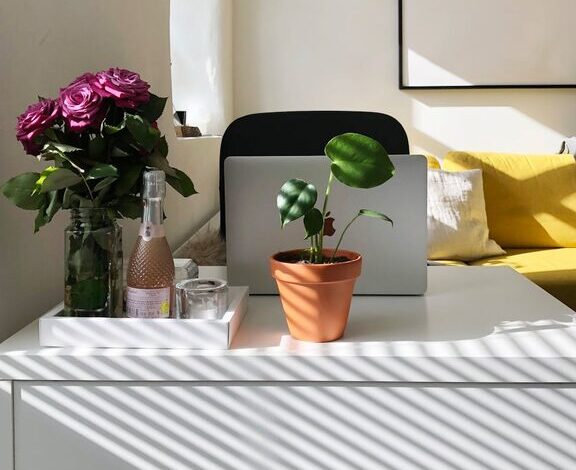
– Decorate Mindfully: Include artwork, plants, or inspirational quotes that motivate you.
– Comfort Items: A soft rug, cozy blanket, or comfortable cushions can make your space inviting.
– Color Choices: Choose colors that make you feel calm or energized. Soft blues and greens are relaxing, while yellows can boost creativity.
6. Manage Technology Efficiently
Keeping your technology setup efficient helps avoid frustration.
– Cable Management: Use clips, sleeves, or ties to keep cords neat and prevent tangling.
– Reliable Equipment: Invest in a good quality keyboard, mouse, and headset to improve comfort.
– Fast Internet: Ensure your internet connection is strong and stable for video calls and online work.
7. Establish Boundaries
Setting clear boundaries helps maintain work-life balance.
– Dedicated Workspace: Keep work materials confined to your office area.
– Defined Work Hours: Set specific work times and stick to them to prevent burnout.
– Communicate: Let family or housemates know your work schedule to minimize interruptions.
8. Incorporate Break Areas
Taking breaks is vital for productivity and wellbeing.
– Comfortable Seating: A small sofa or lounge chair lets you step away from your desk.
– Stretching Space: Leave room to stretch or do short exercises during breaks.
– Refreshments Access: Keep water, tea, or snacks nearby to stay energized without leaving the space.
9. Maintain Cleanliness
A clean workspace positively affects your mindset.
– Daily Tidying: Spend a few minutes at the end of each day to clean your desk.
– Regular Deep Cleaning: Dust and vacuum your office weekly to maintain air quality and appearance.
– Sanitizing: Wipe down surfaces regularly to keep the area hygienic.
10. Adapt and Improve
Your ideal workspace may evolve over time.
– Monitor Your Needs: Pay attention to what helps or hinders your productivity.
– Try New Layouts: Don’t hesitate to rearrange furniture or add new elements.
– Seek Inspiration: Follow blogs or social media channels focused on home office design.
—
By applying these tips, you’ll create a home office that not only feels cozy but also supports your productivity. Remember that a well-thought-out workspace is a valuable investment in your work performance and overall well-being. Happy decorating!